Plan setup & education
Support with plan configuration, eligibility and contribution rules, plus clear guides and bilingual employee education.

Understand your benefit accounts and the support behind them. Explore TEB’s administration services, compare FSA and HSA basics, and learn how to manage your account through the consumer portal.
TEB brings together plan setup, employee education, account administration and ongoing service for FSA and HSA programs.
Support with plan configuration, eligibility and contribution rules, plus clear guides and bilingual employee education.
Online account access, reimbursement support and payment-card features help participants manage eligible expenses.
Payroll feeds and benefits-system integrations support contribution and reimbursement administration.
Support for HR teams and employees continues through open enrollment, new hires and day-to-day account questions.
Available accounts, reimbursement features, payment methods and integrations depend on the employer’s plan and administration arrangement.
| Question | Health Care FSA | HSA |
|---|---|---|
| Where do I start? | Your employer’s FSA offering and enrollment rules. | Your medical plan’s HSA eligibility and IRS contribution requirements. |
| Does money carry forward? | Generally use-it-or-lose-it; a plan may offer a limited carryover or grace period. | Unused account funds carry forward. |
| Can both apply? | A general-purpose health FSA can affect HSA contribution eligibility. Confirm compatibility before combining benefits. | |
| Where can I learn more? | FSA questions and answers | HSA questions and answers |
An employer-sponsored FSA lets eligible employees set aside money through payroll for certain expenses with tax advantages. The type of FSA determines what it can reimburse.
Helps pay eligible out-of-pocket health costs, such as copays and qualifying dental or vision expenses. Check your plan’s expense rules before purchasing.
A separate benefit for eligible care expenses that allow you and, generally, your spouse to work or look for work. It does not pay a dependent’s medical bills.
Typically covers eligible dental and vision expenses and may be compatible with HSA contributions. Confirm the exact arrangement with your employer before combining benefits.
Contribution limits, eligible expenses and deadlines depend on the benefit and applicable year. Confirm your employer’s current plan information before making an election.
An HSA is an individually owned account with federal tax advantages for qualified medical expenses. Contribution eligibility depends on qualifying health coverage and other IRS requirements.
Confirm that your medical plan is HSA-eligible. A high deductible alone does not establish contribution eligibility; other coverage can also affect it.
Eligible medical, dental and vision expenses may qualify. Keep receipts and check the rules before using HSA money for a particular expense.
Unused HSA funds carry forward. The account remains yours when you change employers, although your ability to make new contributions can change.
Owning an existing HSA and being eligible to add new contributions are different. Review eligibility again when your coverage or circumstances change.
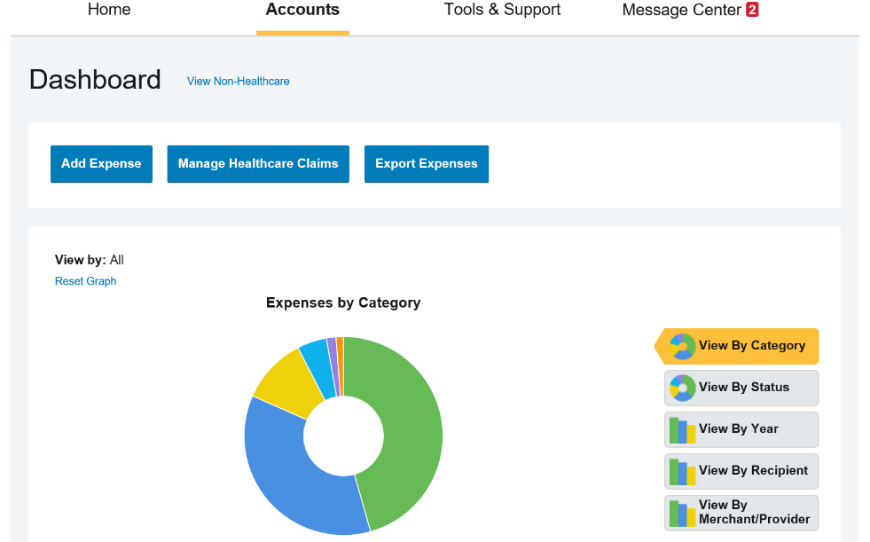
For accounts administered through TEB, the consumer portal provides a place to review balances, manage expenses and find account resources. The steps below are adapted from TEB’s consumer portal guide.
Use the login information provided by TEB or your plan administrator. Follow any first-time setup prompts in the portal. If you need access help, contact TEB.

Review balances and account activity.
Check alerts and receipt requests.
Find available forms, plan summaries and help.
Review notices and notification preferences.
For accounts that offer reimbursement or provider-payment features:
A submitted request is not the same as an approved reimbursement. Check Tasks or Claims for documentation requests and follow your plan’s rules.
Eligible dental and vision expenses can qualify, along with other eligible out-of-pocket medical expenses. Ask the administrator about the specific service or item and keep your documentation.
Health FSAs generally follow a use-it-or-lose-it rule. An employer may offer a limited carryover or a grace period, but not both for the same health FSA. Check which option, if any, your plan provides.
Not necessarily. Your administrator may request an itemized receipt or other evidence even when the card payment goes through. Follow the request and submission deadline.
No. Dependent care generally covers qualifying care needed for work, such as eligible day care. Health care expenses belong under the applicable health benefit. Different eligibility and reimbursement rules apply.
A general-purpose health FSA can make you ineligible to contribute to an HSA. A qualifying limited-purpose arrangement may be compatible. Check all coverage, including a spouse’s FSA, before contributing.
Use the administrator and account-access instructions supplied by your employer. If you cannot find them, contact TEB with your employer’s name and the type of FSA you have.
Look for Receipts Needed in Tasks, or open Claims and review the receipt status. Select the request and upload the required documentation. Keep your original receipt and check the status after submission.
Open Accounts → Claims to review claim history and the available status filters. Use Accounts → Payments for reimbursement payment history. Expand an item to review the details shown for your account.
Open Tools & Support for available forms and plan summaries. In Account Summary, selecting an account may also open its plan rules. Use Message Center to review available notices.
No. Unused HSA money carries forward for future use. This differs from the plan-year rules that generally apply to health FSAs.
Yes. The account is yours. You can continue using existing funds for qualified expenses, even if you are no longer eligible to make new contributions.
Premiums generally do not qualify, but there are specific exceptions. Consult the IRS guidance or a tax professional before treating a premium as an eligible HSA expense.
A spouse’s general-purpose health FSA that can reimburse your expenses can affect your HSA contribution eligibility. Ask the plan administrator to review the arrangement before you contribute.
The applicable IRS limit depends on the year and your circumstances. Employer contributions count toward the overall limit. Confirm the current amount and your eligibility instead of reusing a prior year’s election.
IRS Form 8889 is used to report HSA contributions and distributions and figure related tax amounts. Review the current form instructions with your tax preparer.
Use your HSA custodian’s account-access and support instructions. If you need help identifying that resource, contact TEB with your employer’s name. Do not email account numbers or medical documents.
Review the Accounts area on the home page for balances. Open Accounts → Account Summary and select an account or linked amount to review the available activity and election details.
If your account includes a payment card, open Accounts → Banking and use Report Lost/Stolen or Order Replacement under Debit Cards. Follow the portal’s instructions or contact TEB for help.
If your employer offers online setup, open Tools & Support → Change Payment Method and follow the prompts for the applicable account. Complete any bank-verification steps requested inside the secure portal.
Content reviewed October 23, 2026. This page provides general education; your plan documents and official notices determine your specific options.
Tell TEB which benefit you are asking about and the name of your employer. We can help direct your question to the appropriate resource.